Ice-Dam Ceiling Stains
Rings and soft spots where meltwater backed up under the shingles, dried out, sealed and refinished.
Ceiling stains from ice damsPella Drywall Repairs · Marion County, Iowa
Ice-dam rings on the ceiling, cracks wandering through old plaster, raw gaps around new windows and holes by the door, each one closed up, blended into the texture nearby and handed back primed or paint-ready.
Ring this number and a drywall pro based near Pella comes by to see the wall, then prices it before any work.
Call 7 days, 7am–9pm
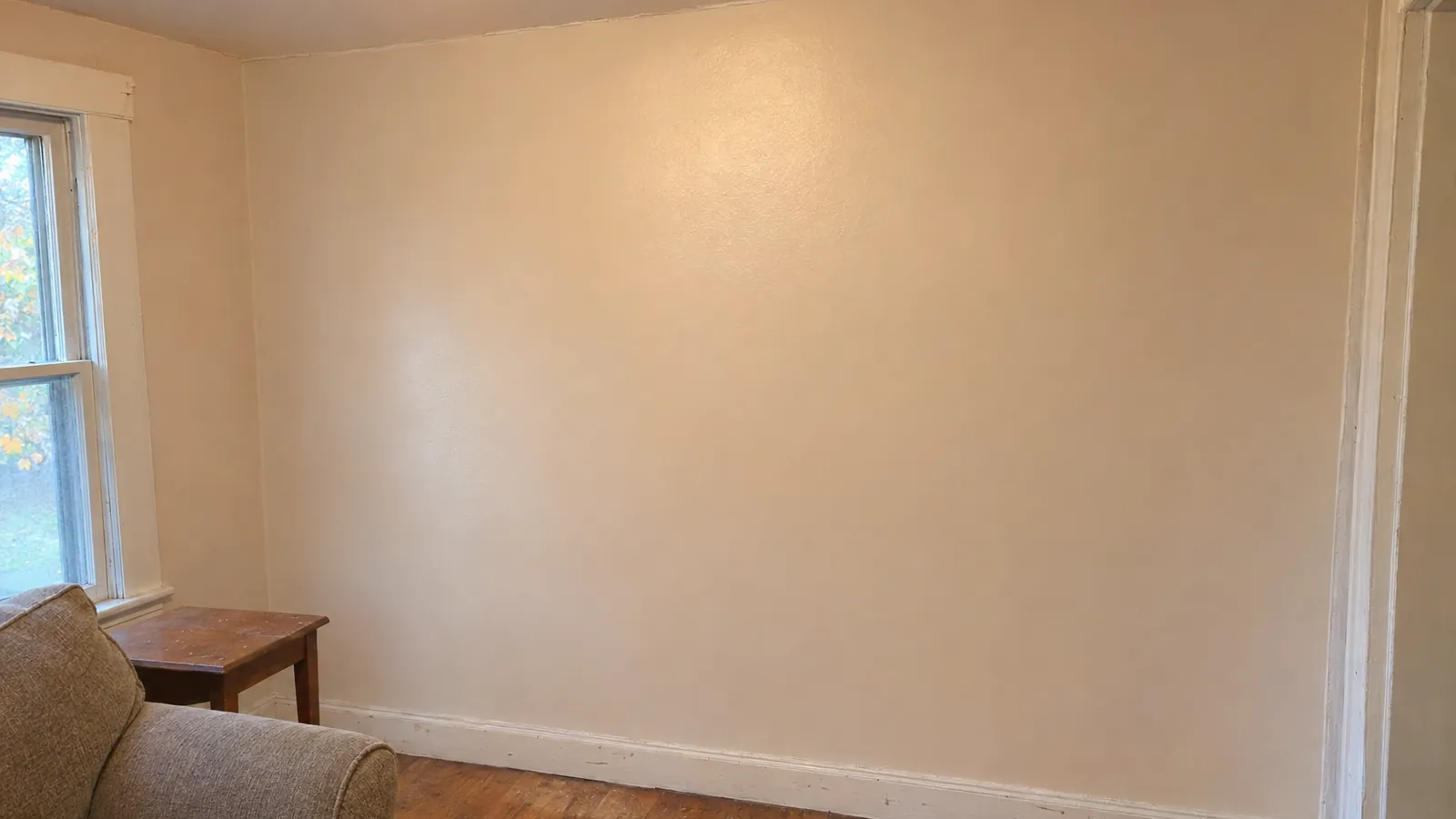
Pella has been putting up houses since the Scholte party settled here in 1847, and each era since has left its own wiring, piping and ductwork behind the walls, which is why so many repair calls begin with a hole that somebody else had to cut. When an electrician fishes a new circuit, a plumber reaches a shutoff or a heating installer moves a register, the opening they leave is rarely their concern; closing it so it disappears is the part we take on.
New boxes are often cut a little oversized. The gap around the box gets backed or filled, taped and coated so the cover plate sits flat and nothing shows at its edges.
A square hole behind a shower valve or under a sink gets wood cleats along its edges, a fresh cutout of board fastened to them, and tape and compound feathered well past the cut. Where a valve will need reaching again, an access panel can go in instead.
When a duct run moves, the old register hole is closed with board of the same thickness as the wall so the patch doesn't sit proud, then finished to the surface around it.
Small holes from speaker wire, cable or alarm runs are filled and spot-coated; a row of them along one wall is usually skimmed as a single strip so the line doesn't read through paint.
If the trade work happened in a plaster room, the patch gets brought out coat by coat to the plaster's depth, which is thicker than standard board, so the repair doesn't leave a shallow dish in the wall. Book the patch for after the trade has finished and any required inspection has been signed off.
A wall repaired before anyone photographed it leaves a gap in the story, and the people who may need that story later, an insurance adjuster, a landlord, a tenant at move-out, can only go on what was written down or photographed at the time.
We don't advise on claims or say what a policy covers; that conversation is between you and your insurer or landlord. When the repair quote is written up, ask for the square footage being replaced and the materials involved to be spelled out, so it sits alongside your own photos as part of the record.
Nearly every call from Pella falls into one of four groups, and each has a page of its own on what causes that damage, how a sound repair goes together and what homeowners tend to wonder about before booking.
Rings and soft spots where meltwater backed up under the shingles, dried out, sealed and refinished.
Ceiling stains from ice damsSeam lines, diagonal splits off door corners and map-cracked plaster, bridged with tape so they stay closed.
Crack repair in plaster and boardOpen strips, torn face paper and missing returns left once new windows or doors are installed.
Patching around new windowsDoorknob punches, move-out anchor holes and crushed corner bead, rebuilt flat with the texture blended in.
Hole and corner repairs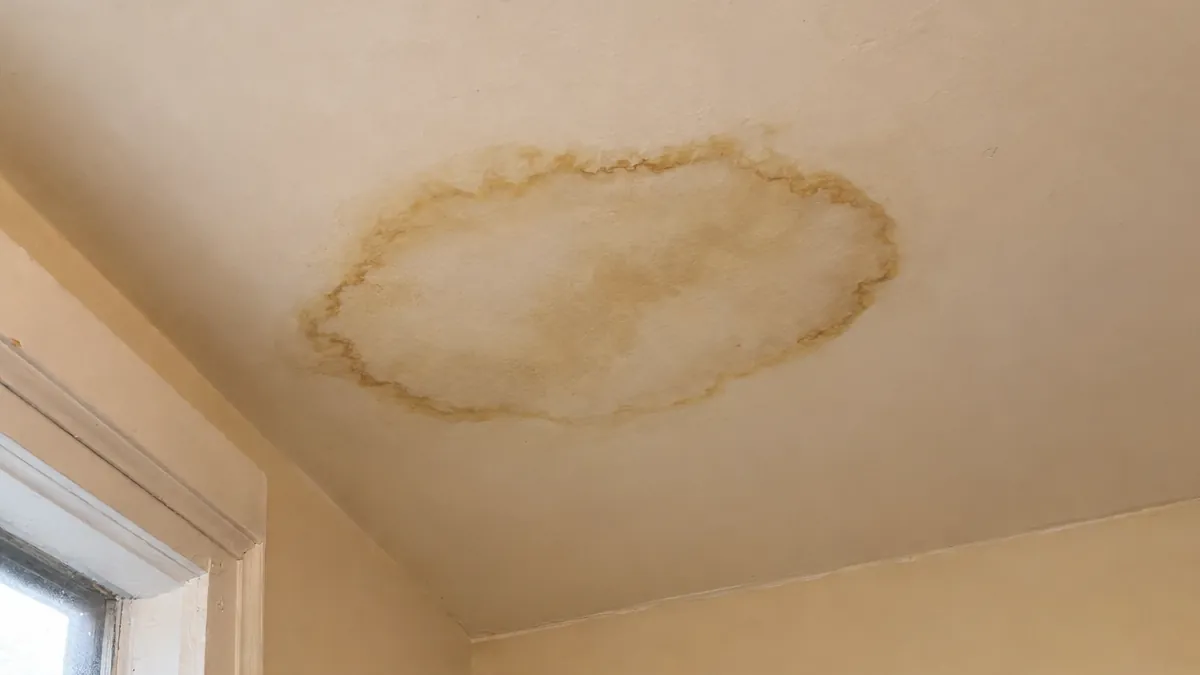
The temptation after a leak is to paint over the stain the same week, but the University of Minnesota Extension's guidance on ice dams says it plainly: interior damage should not be repaired until the ceilings and walls are dry. The order below holds whether the water came from a roof edge, a toilet supply line or a washing machine hose.
Iowa has a humid continental climate, with hot summers and cold winters, and the walls of a Pella house show the swing from one to the other in ways that arrive with the calendar.
State climate records put the first inch of snow in mid-November most winters, and average snowfall across Iowa runs from roughly 18 to 42 inches a year. Snow resting on a roof over a warm attic melts from below, refreezes at the colder eaves and backs water under the shingles, which surfaces indoors as a brown line where an exterior wall meets the ceiling.
Des Moines, about forty miles up the road, has January normals of a 31-degree high and a 14-degree low. Heated rooms dry out, framing lumber shrinks a little, and the tape over seams near outside walls can open into straight hairlines that close up again by summer.
Snowstorms and tornadoes are the state's most common natural disasters, and Pella itself saw an EF3 tornado strike a manufacturing plant on July 19, 2018. Wind-driven rain finds the gaps around windows and roof penetrations, so a spring storm can show up weeks later as a soft patch below a sill.
Iowa averages about six days a year with a heat index above 95 degrees. In rooms closed up without air conditioning, damp air can swell paper tape and lift paint over old patches, which shows as bubbles running along a seam.
Most calls come from Pella itself, a town of 10,464 by the 2020 count, but the work reaches across Marion County and into the neighboring counties too.
Pella's housing count rose from 4,086 units at the 2010 census to 4,271 at the 2020 count, so a fair share of the walls in town are recent board on recent framing, and new houses carry their own set of early problems that have nothing to do with age.
In winter the top of a roof truss sits in a cold attic while its bottom chord stays warm under the insulation, and the truss can bow upward, lifting the ceiling away from interior walls and leaving a crack at the corner. Because it comes and goes with the seasons, the answer is usually a flexible joint or a trim detail rather than more compound.
Framing lumber keeps drying and shrinking through its first few heating seasons, which pushes screw and nail heads out through the finish as small round bumps. Each one is reset with a new screw beside it, then spotted and touched up.
Thin diagonal lines off the corners of doors and windows are common as a new house settles. A single hairline is usually cosmetic; a split that grows wider month after month, or a door that starts to bind, is worth having looked at more closely before it is patched.
Cracks that come and go with the seasons are covered in more depth on the page about cracked walls and ceilings.
Once you've called or sent a photo and agreed on a price with the local pro who quoted it, the visit itself tends to follow a set pattern, whether the job is one hole or a whole stained ceiling.
The damage is checked against the quote, with a moisture reading on anything that was wet, before any saw touches the board.
Furniture is moved back or covered, floors get drop cloths, and a doorway can be closed off with plastic where sanding is planned.
Loose material is cut back to sound edges, loose plaster is screwed tight or removed, and backing goes in wherever the patch needs it.
Tape and a first coat of compound go on, then fill and finish coats, each one wider and thinner than the coat before it.
Ready-mixed compound dries in the air, which can mean a return trip; setting-type compound hardens by chemical reaction and allows several coats in one visit. Larger jobs usually span more than one day.
Dust is vacuumed, drop cloths come up, and the repaired surface is handed back either primed or ready for primer, as agreed beforehand.
Everything that comes before the visit, from your first message to the agreed price, is set out on the page explaining how a job is arranged.
National figures can at least frame the conversation: a guide on Bob Vila's home-improvement site puts several holes and cracks in one room at roughly $200 to $550, and cites Fixr for at least $75 to fix a small hole up to four inches across. Those are national numbers, not prices for Pella. What actually moves a quote here is the size and number of repairs, plaster versus board, whether a ceiling is involved, how much texture has to be blended, and whether the job takes one trip or several to allow for drying.
Describe the wall, the room and roughly how big the damage is. One clear picture texted over shows a local pro most of what they need to know before the visit.
Ring this number and a drywall pro based near Pella comes by to see the wall, then prices it before any work.
Call 7 days, 7am–9pm
Next comes a call back from a Pella-area drywall pro to go over the damage and arrange your quote.